
Hiring Filipino Developers After Australia’s Fair Work Ruling: What You Need to Know
If your company is outsourcing to the Philippines or planning to hire offshore developers, the rules have changed. A landmark 2025 ruling by Australia’s Fair Work Commission found that a Filipino remote worker engaged as an independent contractor was, in fact, an employee under Australian law. The ruling carries serious implications for any Australian business hiring talent from the Philippines.
This isn’t a scare piece. It’s a practical guide to help you understand what changed, what’s at risk, and how to keep hiring Filipino developers compliantly and confidently.
What Happened: The Fair Work Ruling Explained
In September 2024, the Fair Work Commission accepted an unfair dismissal claim from Joanna Pascua, a paralegal based in Manila who worked remotely for a Brisbane-based firm. The company had classified her as an independent contractor. The Commission disagreed.
The ruling established that Pascua was an employee because of three key factors:
Control and integration: She worked full-time hours on an Australian schedule, reported directly to Australian management, and was fully embedded in the company’s operations.
Contractor label vs. reality: Despite the contract calling her a “contractor,” the day-to-day relationship looked identical to employment.
Wage obligations: The Commission found she should have been paid at least the Australian national minimum wage of AUD $24.87/hour — significantly more than she was receiving.
The bottom line: Physical location no longer shields Australian companies from Fair Work obligations. If your offshore worker operates like an employee, they may be treated as one under Australian law.
Read Fair Work Commission — Unfair Dismissal Overview
Who’s at Risk: Does This Affect Your Business?
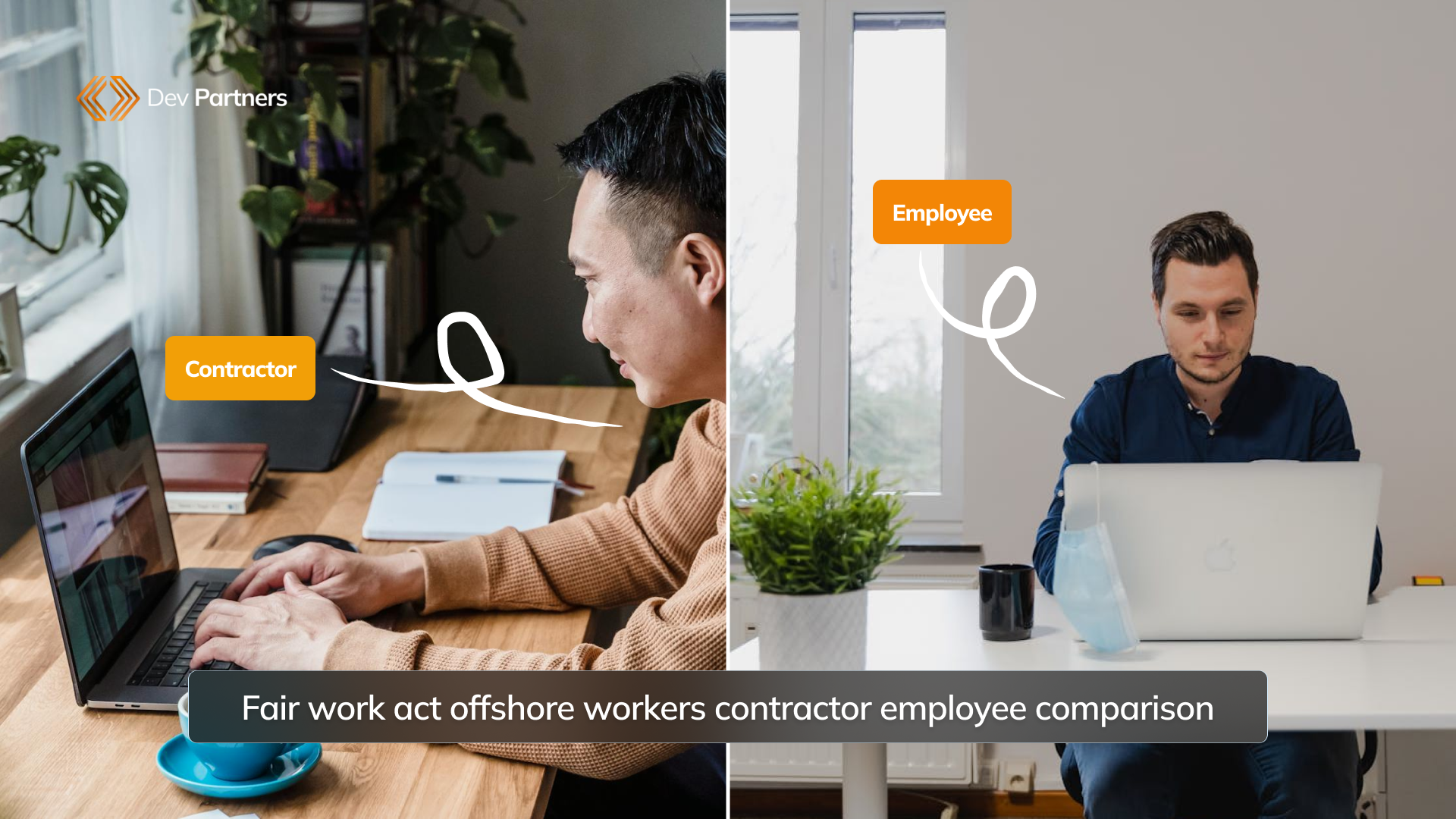
This ruling doesn’t mean all offshore hiring is under threat. It specifically targets companies that engage overseas workers as “contractors” while treating them like employees. If any of the following apply to you, your current arrangement may carry legal exposure:
You hire Filipino workers directly (no intermediary entity in the Philippines) and label them as contractors.
Your offshore workers follow set schedules aligned to Australian business hours.
They report to an Australian manager and are embedded in your team’s workflows.
You provide their tools, systems, and processes.
They work exclusively or primarily for your company.
If this describes your setup, the Fair Work Commission could determine those workers are employees — entitling them to Australian minimum wage, unfair dismissal protections, leave entitlements, and superannuation.
Legal experts have warned this ruling opens the door to class-action claims from offshore workers who have been misclassified. The financial exposure for back-pay alone could be substantial.
Read Australian Government — Employee vs Contractor.
How to Hire Filipino Developers Compliantly
The ruling doesn’t mean you should stop outsourcing to the Philippines. Filipino software engineers remain among the most skilled, culturally aligned, and cost-effective talent pools for Australian companies. What it does mean is that the hiring structure matters more than ever.
There are three compliant paths forward:
1. Use an Employer of Record (EOR) in the Philippines
An EOR is a legal entity based in the Philippines that formally employs the worker on your behalf. The worker is their employee — not yours. This eliminates the misclassification risk entirely because there is no direct employment relationship between your Australian company and the offshore worker.
2. Work With a Staff Augmentation Partner
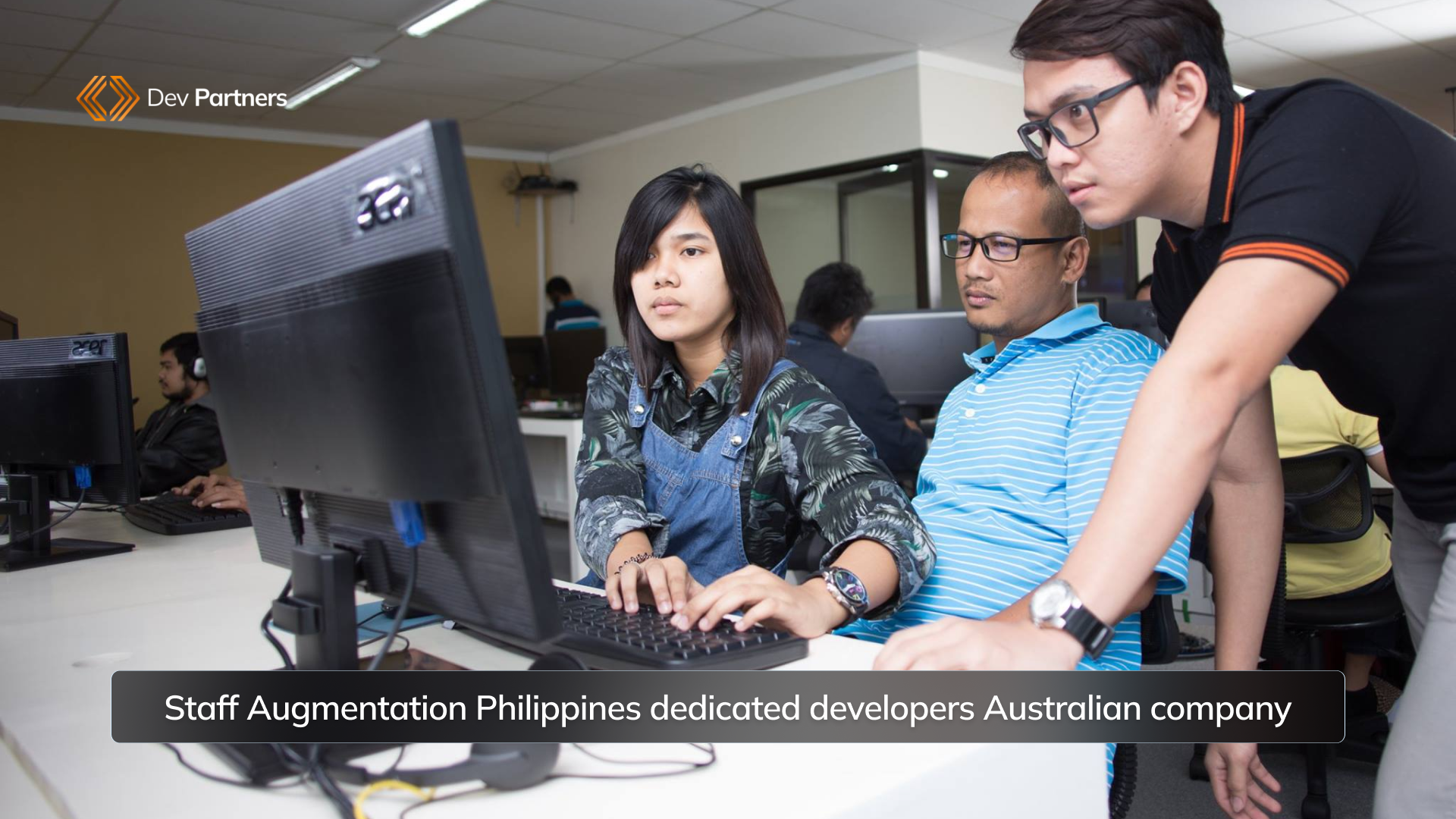
A staff augmentation company like Dev Partners employs the engineers directly, handles payroll, compliance, benefits, and HR — then deploys them to work within your team. You get a dedicated, full-time developer integrated into your workflows without taking on any employment obligations.
This is the model that provides the best balance of control, quality, and compliance. You direct the work. The partner handles the employment.
Check out Dev Partners IT Staff Augmentation Services.
3. Establish Your Own Entity in the Philippines
The most complex and expensive option. You register a business entity in the Philippines and hire workers locally. This makes sense at scale (20+ employees) but is impractical for most Australian SMEs.
Scale your team compliantly — talk to Dev Partners about staff augmentation.
Why Staff Augmentation Is the Smartest Path for Australian Companies
For most Australian companies hiring 1–10 offshore developers, staff augmentation provides the ideal structure. Here’s why:
Zero compliance risk: The engineers are employed by the staff augmentation partner, not your company. There is no contractor misclassification exposure.
Speed: Get pre-vetted, senior developers deployed to your team in as fast as 14 days — without months of recruiting.
Retention: Reputable partners like Dev Partners maintain sub-10% churn because they invest in developer satisfaction, career growth, and competitive compensation.
Dedicated support: A 1:1 account manager handles onboarding, performance reviews, and any HR issues — so you focus on building product, not managing people ops overseas.
How Dev Partners’ Staff Augmentation Model Works.
What Australian Companies Should Do Right Now
Whether you’re already working with Filipino developers or considering it for the first time, here are the immediate steps:
Audit your current arrangements. Review every offshore worker engagement. If they’re labelled as contractors but operate like employees, you have exposure.
Review contracts for misclassification risk. Look at the substance of the relationship, not just the contract language. The Fair Work Commission will do the same.
Transition to a compliant hiring model. Move direct-hire contractors to an EOR or staff augmentation structure. This is the single highest-impact action you can take.
Choose partners with a track record. Not all outsourcing companies are equal. Look for a partner that employs engineers directly, provides account management, and has transparent processes.
Hire Remote Developers Through Dev Partners.
The Opportunity Hasn’t Changed — The Structure Has
The Philippines remains one of the strongest talent markets for software engineering. Filipino developers are English-fluent, culturally aligned with Western business practices, and offer exceptional value for Australian companies looking to scale efficiently.
What’s changed is the legal framework. Direct contractor arrangements are no longer a safe option. But structured partnerships through a trusted staff augmentation provider give you everything you need: top-tier talent, full compliance, and the confidence to scale without legal risk.
Ready to hire Filipino developers the right way? Apply now or book a call with Dev Partners.