
How to Manage a Virtual Assistant from the Philippines
Key Takeaways
The difference between a productive VA and an underperforming one is almost always the management system, not the VA's skill level.
Set three things before day one: working hours and timezone, communication cadence, and quality standards with concrete examples.
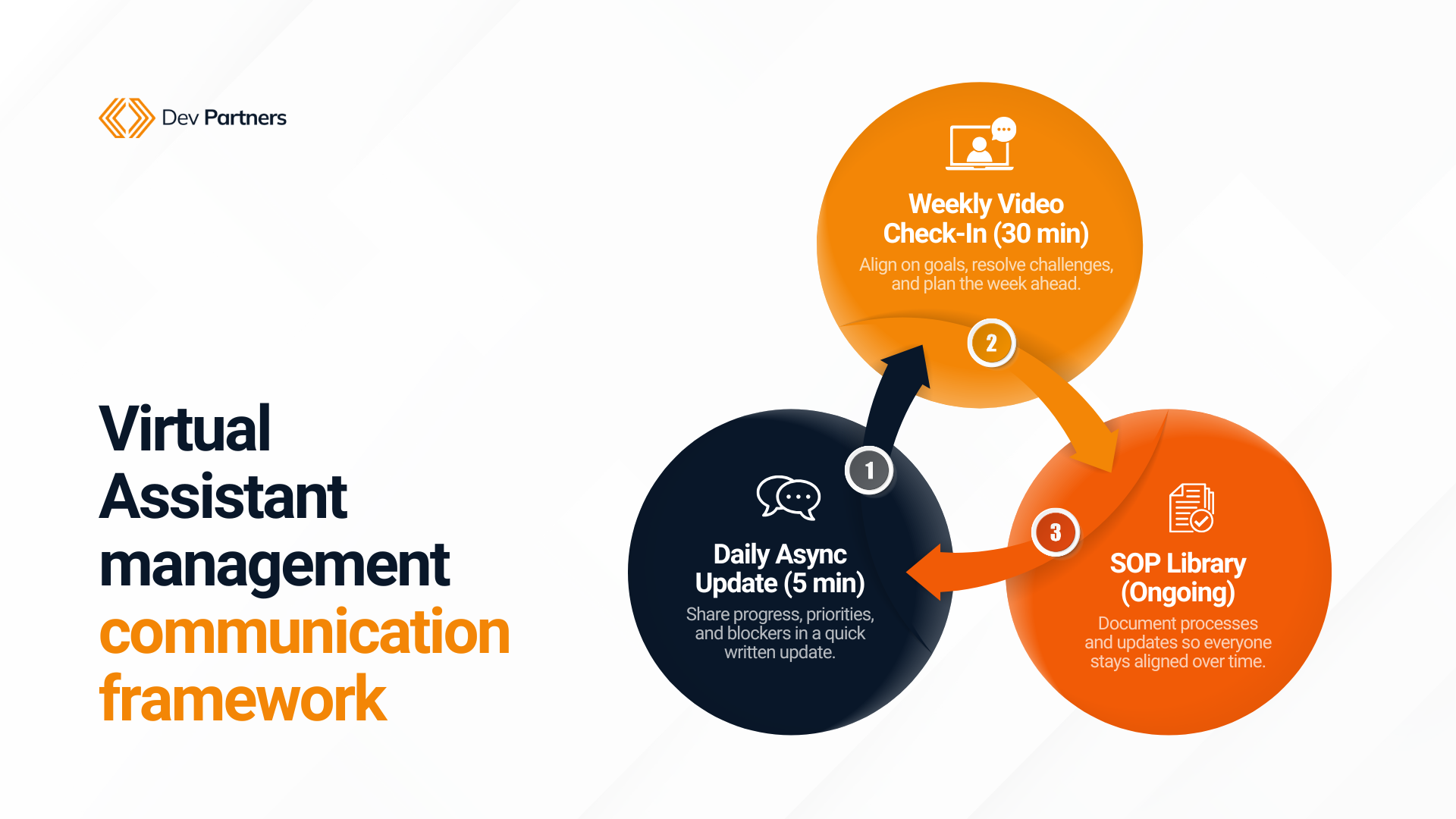
Use a three-part communication framework: daily async updates, weekly video check-ins, and a documented SOP library.
Invest in the relationship. Remote VAs who feel like part of the team produce measurably better work and stay longer.
Dev Partners' 1:1 account managers handle performance monitoring, payroll, and HR so you can focus on directing the work.
Hiring a virtual assistant is the easy part. Managing one effectively, especially when they're working remotely from the Philippines, is where most businesses either unlock massive productivity gains or create frustrating, underperforming relationships. The difference isn't about the VA's skill level. It's about the systems, communication habits, and expectations you put in place from day one.
This guide covers the practical management framework that Dev Partners' most successful clients use to get consistent, high-quality output from their Philippines-based virtual assistants.
Set Expectations Before Day One
The biggest management mistake isn't micromanaging or under-managing. It's failing to define expectations clearly before the VA starts working. When expectations are vague, every task becomes a negotiation about scope, quality, and timing.
Before your VA's first day, document these three things:
Working hours and timezone. Specify the exact hours you expect them to be online, which timezone those hours are in, and how much flexibility exists. Most Filipino VAs working with US clients operate on a shifted schedule (afternoon/evening in Manila to overlap with US business hours). Be explicit about whether you need full overlap or just a few hours of real-time availability.
Communication cadence. Define when and how you'll communicate. Daily standup via Slack at 9 AM your time? Weekly video check-in on Mondays? Async updates in a shared document? The specific format matters less than having one that's consistent and documented.
Quality standards. Show examples of what "done" looks like for the tasks they'll handle. If they're writing email responses, share 5 examples of responses that meet your standard. If they're managing data entry, show them a completed spreadsheet that matches your expectations. Abstract quality standards ("be professional" or "do great work") are useless. Concrete examples are everything.
Equip your VA with the right tools to succeed
Communication Frameworks That Work
The Daily Async Update
Have your VA send a brief end-of-day update covering: what they completed, what's in progress, and any blockers they need your input on. This takes them 5 minutes to write and gives you full visibility without a meeting. Use a Slack channel, a shared Google Doc, or a simple email. The format doesn't matter. The consistency does.
The Weekly Video Check-In
A 15 to 30 minute video call once per week prevents small issues from becoming big problems. Use this time to review priorities for the coming week, give feedback on completed work, and discuss any process improvements. Video builds rapport in a way that text can't, and rapport directly impacts performance and retention.
The SOP Library
Create Standard Operating Procedures for every recurring task. These don't need to be complicated. A Google Doc with numbered steps and screenshots is enough. SOPs eliminate the need to answer the same question twice, allow your VA to train their own replacement if they move on, and ensure consistency even when you're not available to answer questions.
Hire a managed VA through Dev Partners
Tools for Managing a Remote VA
You don't need a complex tech stack. These five categories cover what most businesses need:
Communication: Slack for daily messaging, Zoom or Google Meet for video calls. Keep work communication off personal channels like WhatsApp or Facebook Messenger.
Task management: Asana, Trello, or ClickUp. Give your VA a clear view of priorities and deadlines. Avoid managing tasks through email. Things get lost.
Documentation: Google Docs, Notion, or Confluence for SOPs, process documentation, and shared knowledge. Make everything searchable.
Time tracking (optional): Toggl, Hubstaff, or Time Doctor. Some businesses find time tracking helpful for accountability. Others trust their VA to manage their own time as long as output meets expectations. Choose based on your management style.
File sharing: Google Drive or Dropbox. Set up a clear folder structure before your VA starts so they know where to find and save files.
See the top 5 tools for virtual assistant productivity
Performance Management
Managing a virtual assistant from the Philippines requires the same performance management practices you'd use with any remote employee. The difference is that you need to be more intentional about it because you don't have the informal feedback loops that come from working in the same office.
Set measurable KPIs. "Do a good job" isn't a KPI. "Respond to all customer emails within 2 hours with a satisfaction rating above 90%" is a KPI. Define 3 to 5 measurable metrics that reflect the VA's core responsibilities.
Give feedback frequently and specifically. Don't save all feedback for a monthly review. Address issues and wins as they happen. "The email you sent to [client] was exactly the right tone, keep doing that" is more useful than "you're doing great" at the end of the month.
Invest in the relationship. Remote VAs who feel like part of the team produce better work than those treated as task machines. Include them in team celebrations, recognize their contributions, and ask about their professional goals. This isn't soft management. It's how you retain a good VA for years instead of months.
Learn why businesses hire offshore VAs in the Philippines
What Dev Partners Handles for You
If you hire through Dev Partners, your 1:1 account manager handles the management infrastructure so you can focus on directing the work:
Performance monitoring, payroll and HR administration, equipment and workspace, replacement guarantee if the fit isn't right, and career development to keep your VA engaged long-term. You manage the what and the when. Dev Partners manages the how and the support system around it.
Apply to hire a VA with built-in management support
FAQ
How much time should I spend managing my VA each day?
After the first 2 to 4 weeks of onboarding, most clients spend 15 to 30 minutes per day on VA management (reviewing updates, answering questions, assigning tasks). With good SOPs and clear expectations, this decreases over time.
Should I use a time tracker with my Philippines VA?
It depends on your management style. If you're more output-focused, tracking deliverables and quality is more useful than tracking hours. If you're billing clients by the hour or managing a large VA team, time tracking adds useful accountability.
How do I handle timezone differences?
Most Filipino VAs are accustomed to working shifted schedules to align with US, UK, or Australian business hours. Define the overlap hours you need (typically 3 to 5 hours) and let the VA structure the rest of their day around those hours.
What if my VA's performance drops after the first few months?
Address it directly and quickly. Have a specific conversation about what's changed, what the expectations are, and what support they need. If you're working with Dev Partners, your account manager can facilitate this conversation and implement a performance improvement plan.